


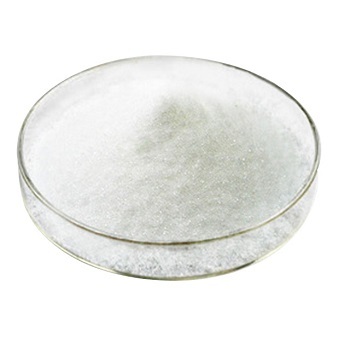
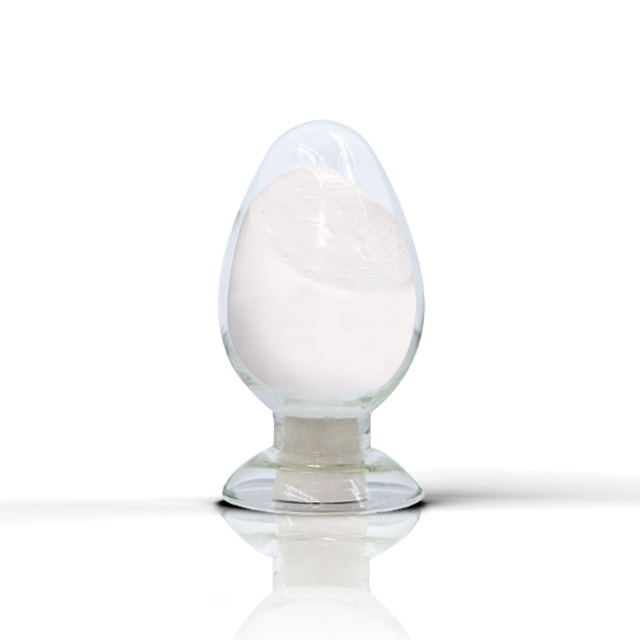
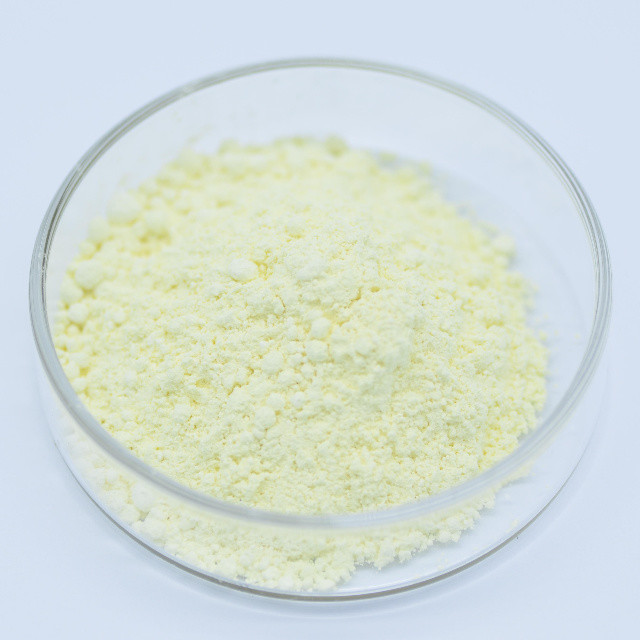
Disproportionated Rosin
Category:
Product Description
Product Details
Introduction
The essence of the disproportionation reaction is its own redox process. Disproportionated rosin is a product obtained by a disproportionation reaction in which part of the rosin is oxidized and the other part is reduced in the presence of a catalyst and the action of inorganic acid and heat. Disproportionated rosin is a mixture of dehydroabietic acid (C19 H33COOH), dihydroabietic acid (C19 H33COOH) and tetrahydroabietic acid (C19 H33COOH), with a molecular weight of 304.
QualityTechnical index:
| Index name | Premium product | First grade product |
| Color, Lovibond color number ≤ | yellow, 20 red, 2.1 | Yellow, 40 red, 3.4 |
| Organic acid content/%≤ | 0.1 | 0.5 |
| Dehydrogenative acid content/%≥ | 52.0 | 45.0 |
| Softening point (ring and ball method)/℃≥ | 75.0 | 75.0 |
| Acid value/(mg/g, calculated as KOH)≥ | 155.0 | 155.0 |
| Unsaponifiable matter content/%≤ | 10.0 | 12.0 |
Preparation method:
Put the rosin into an aluminum or copper pot, heat and melt, then continue to heat to (270℃±10)℃, perform a disproportionation reaction through a palladium-carbon catalyst, and the product is vacuum distilled to obtain the finished product.
Usage:
This product has stable performance and is often made into potassium soap. It is used as an emulsifier for styrene-butadiene rubber, chloroprene rubber, nitrile rubber and its latex, ABS and other polymer polymers to improve and enhance rubber properties; it is also widely used in It can be used to manufacture water-soluble pressure-sensitive adhesives, which can also be used as ingredients, plasticizers, and binders for rubber components; as tackifiers for adhesives, etc.; it is also an important raw material for manufacturing chewing gum, advanced papermaking rubber, printing ink, etc. .

Keyword:
Send Inquiry
Leave a message immediately and receive free product consultation. We will arrange experts to contact you as soon as possible.