

How do Paint Matting Agents Create a Low-Gloss Coating Surface?
2026-11-13
What Is a Paint Matting Agent?
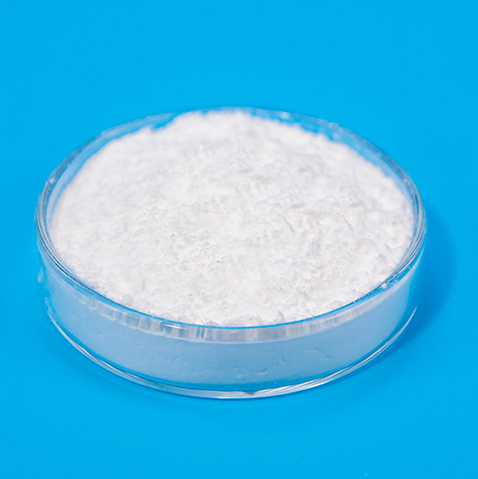
Matting agents for coatings are functional materials that can significantly reduce the gloss of a coated surface; they produce diffuse reflection on the paint film surface by creating a microtextured surface. Their main component is ultrafine synthetic silica, supplemented by micropowdered wax and stearate compounds.

Core Functions of Matting Agents
The primary function of a matting agent is not to absorb light nor even to darken the colour; instead, it alters the microscopic morphology of the coating film's surface, thereby reducing directional specular reflection and increasing diffuse reflection, which in turn reduces surface glare.
Main Types of Matting Agents and Differences in Their Functions
Type | Representative Materials | Main Functions | Formulation Considerations |
|---|---|---|---|
Silica Matting Agents | Precipitated silica, silica gel type silica, surface-treated silica | Form a micro-rough surface and reduce specular reflection. | Particle size, pore volume, surface treatment, transparency, viscosity, sedimentation |
Inorganic Filler Matting Agents | Diatomaceous earth, talcum powder, calcium carbonate, etc. | Increase surface roughness and provide volume filling. | Transparency, hand feel, hiding power, stain resistance, cost |
Wax Matting Agents & Surface Additives | Polyethylene wax, polypropylene wax, amide wax, etc. | Adjust surface smoothness and anti-blocking property, improve abrasion resistance, and assist in gloss reduction. | Recoatability, interlayer adhesion, scratch resistance, surface migration |
Organic Polymer Matting Agents | Polymer micro-particles, polymethylurea materials, etc. | Form fine surface undulations or scattering structures via organic particles. | Flexibility, hand feel, dispersibility, chemical resistance |
Self-Matting Resins | Self-matting polyurethane dispersions, self-matting acrylic systems, etc. | Form a low-gloss surface during resin film formation. | Film-forming property, stain resistance, hardness, cost, system compatibility |
Composite Matting Systems | Combinations of silica, wax, organic particles and resins | Control gloss and tactile feel through multiple mechanisms. | Formulation stability, workability, batch consistency |
In coating formulations, silica is a widely used matting agent because its particle size, the pore volume, and surface treatment are adjustable, and its refractive index is similar to that of many resins, which facilitates the development of clear, transparent, and matte layers. Waxes are commonly used to improve ease of application, abrasion resistance, anti-blocking properties, and tactile feel; in powder coating and wood coatings, wax additives can also help control appearance, tactile feel, scratch resistance, and stability during powder processing.
Key Factors Affecting Matting Efficiency
More matting agent doesn't necessarily mean better. What really determines the effect is the surface structure created by the interaction of the particles, the resin, the film-forming properties, and the application conditions.
Particle size: Determines the scale of the rough structure
Mattifying agents with larger particle sizes are more likely to create visible irregularities on the surface and generally offer higher matting efficiency; However, when the particles are too large, the surface can have a gritty feel, reduced transparency, greater susceptibility to scratches, and a tendency to trap contaminants. Matting agents with smaller particle sizes promote a smooth feel and improve clear coat transparency, but their matting efficiency may be insufficient, requiring higher levels of addition.
Pore volume: Affects matting efficiency, oil absorption and viscosity
The higher the pore volume in the porous silica, the more pronounced the volume effect and surface interaction become per unit mass, which often helps to improve matting efficiency. However, a high pore volume can also lead to higher oil absorption, resulting in an increase in coating viscosity, weaker flow, and a narrower application window. Therefore, a high pore volume is suitable for systems that require high matting efficiency but may not be suitable for systems with a high solids content, those intended for spray application, or those with strict low-viscosity requirements.
Surface treatment: Determines compatibility and stability
Silica has an extremely polar surface; when untreated, it can increase viscosity, water absorption, and the risk of hard sedimentation. After organic treatment, ageing, or silane modification, the wave, dispersion, sedimentation, and transparency of the matting agent in the resin will change.
Film shrinkage: Governs whether particles can form surface undulations
Solvent-based coatings and some water-based coatings experience significant volume shrinkage during the drying process, which causes the particles to move closer to the surface and form an uneven texture. In high-solids, solvent-free, 100% solids UV curing systems, shrinkage in film thickness due to volatilisation is minimal. In general, it is difficult to achieve surface texturisation by relying solely on the movement of particles as the film shrinks; therefore, it is more challenging to achieve a matte finish. Powder coatings are also influenced by factors such as melt flow, resin compatibility, curing reactions, and texturisation design; they cannot be evaluated solely on the logic of reduction due to evaporation applicable to liquid coatings.
Curing speed: Affects the formation time of surface structure
UV-curing systems cure rapidly, and the coating film is quickly locked into a cross-linked network, leaving limited time for matting agent particles to migrate, orient, and form a surface structure. Curing speed: Affects the formation time of surface structure
Previous page:
Next page:
Blog update
What are the types of chemical materials
2024-11-05
What do chemical materials do?
2024-11-05
What are the industrial chemicals
2024-11-05