

What Is Potassium Bromide?
2026-10-08
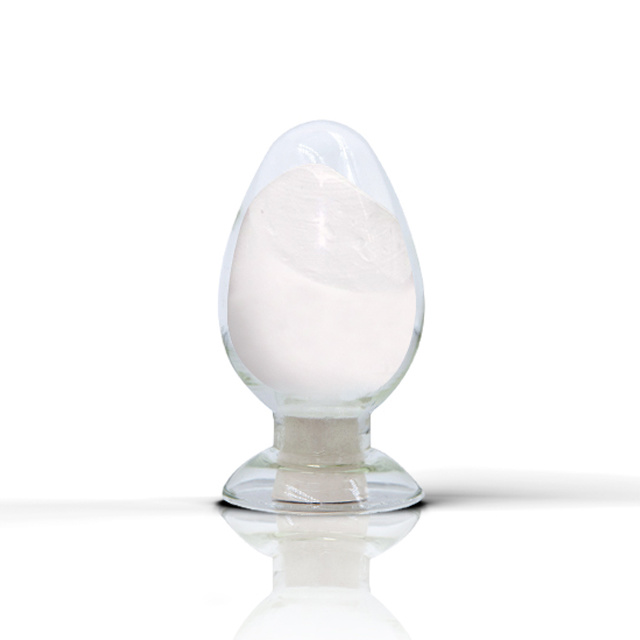
Potassium bromide (CAS 7758-02-3), with the chemical formula KBr and a relative molecular mass of 119.002, is a colourless cubic crystal that is slightly hygroscopic. It has a relative density of 2.74 (at 25°C) and a melting point of 734°C and a boiling point of 1435°C; it is highly soluble in water and slightly soluble in ethanol, diethyl ether, and glycerol. It should be stored in a sealed container away from light. It can be prepared by the iron-bromine method, in which bromine is first reacted with iron to form iron(III) bromide, which is then heated with a potassium carbonate solution; iron(III) tetroxide is then filtered out. It is also a byproduct of the preparation of potassium bromate by passing bromine vapour through a potassium hydroxide solution.
Potassium bromide is primarily used in spectral analysis, drop-by-drop analysis for the determination of copper and silver, polarographic analysis of indium, cadmium, and arsenic, and as a photographic developer. It can be used as a sedative; in photography, it is used to manufacture dry silver bromide plates; it is also used in the production of special soaps, in medicine, and in lithographic printing.

How Is Potassium Bromide Made For?
Electrolysis Method
Potassium bromide, synthesized from bromine and potassium hydroxide, is dissolved in distilled water to prepare the electrolyte. After 24 hours of electrolysis, the first batch of crude product is harvested; subsequent batches are collected every 12 hours. The crude product is washed with water to remove potassium bromide, then dissolved in distilled water. A small amount of potassium hydroxide is added to adjust the pH to 8; after maintaining this temperature for 0.5 hours, the solution is filtered. The clear filtrate is cooled to room temperature in a crystallizer, and potassium bromate is obtained through crystallization, separation, and drying.
Chlorination Method
After the reaction between lime milk and bromine, chlorine gas is introduced to carry out the chlorination reaction until the pH reaches 6–7, at which point the reaction ceases. After removing the residue, the filtrate is evaporated. Add barium chloride solution to form a barium bromate precipitate. Suspend the filtered precipitate in water, maintain a constant temperature, and add potassium carbonate to initiate a double decomposition reaction. The crude potassium bromate is washed multiple times with a small amount of distilled water, then filtered, evaporated, cooled to crystallize, separated, dried, and ground to produce food-grade potassium bromate.
Bromine-Potassium Hydroxide Method
Using industrial bromine and potassium hydroxide as raw materials, dissolve the potassium hydroxide in 1.4 times its mass in water to prepare a solution. Pass bromine gas into the solution under constant stirring. When a sufficient amount of bromine has been added, white crystals will precipitate, yielding crude potassium bromate.
Continue adding bromine until the liquid turns pink. While adding bromine, continuously add cold water to the solution to prevent the loss of bromine due to excessive temperature. Recrystallize repeatedly, filter, centrifuge to remove moisture, then dissolve in deionized water and add a small amount of potassium hydroxide to remove excess bromine from the synthesis. Recrystallize once more, then remove the crystals, dry them, and the finished product is obtained.
Properties
Melting point | 734°C (lit.) |
Boiling point | 1435°C/1 atm (lit.) |
Density | 3.119 g/mL at 25°C (lit.) |
bulk density | 900-1000 kg/m³ |
vapour density | 7.14 (vs air) |
vapour pressure | 175 mm Hg (20°C) |
refractive index | 1.559 |
Flash point | 1435°C |
storage temp. | Store at +5°C to +30°C. |
solubility | H₂O: 1 M at 20°C, clear, colourless |
form | random crystals |
colour | White |
Specific Gravity | 2.75 |
PH | 5.0-8.8 (25℃, 50 mg/mL in H₂O) |
Water Solubility | 650 g/L (20ºC) |
Risk and Safety Statements
Symbol (GHS) | GHS07 |
Signal word | Warning |
Hazard statements | H319 |
Precautionary statements | P280-P305+P351+P338-P337+P313 |
Hazard Codes | Xi |
Risk Statements | 36/37/38-36 |
Safety Statements | 26-45-61-7/9-39-36 |
WGK Germany | 2 |
F | 3-10 |
Storage Class | 11 - Combustible Solids |
Applications
1. In the photosensitive materials industry, it is used to manufacture photosensitive film, developers, film thickening agents, color adjusters, and color photo bleaches, among other products;
2. In medicine, it is used as a neuroleptic (tribromide tablets);
3. It is also used as a chemical analysis reagent, for the transmission of visible and infrared light, in the manufacture of specialty soaps, and in engraving and lithography;
4. It is also used as an analytical reagent.
You Also Like

Previous page:
Next page:
Blog update
What are the types of chemical materials
2024-11-05
What do chemical materials do?
2024-11-05
What are the industrial chemicals
2024-11-05