

What is Gasoline Polyethylene?
2026-04-28
Two major applications of gasoline polyethylene: the circular economy of converting waste polyethylene into fuel through pyrolysis and cutting-edge applications of high-performance polyethylene in automotive fuel systems and fuel tanks.
The Traditional Production Methods of Gasoline Polyethylene
For waste polyethylene plastic with large amounts of polyolefin and difficult to convert, current conversion strategies mainly rely on high reaction temperatures (above 400 ℃), precious metal catalysts, and external hydrogen sources, thereby reducing the industrial potential of polyolefin chemical recovery. The low-cost and low-energy conversion of polyolefins has always been one of the challenges in the field of plastic conversion.
Gasoline Polyethylene New Strategy: Inspiration from Hydrocracking

The scientific research team of the Institute of Chemistry of the Chinese Academy of Sciences successfully transformed polyethylene plastics into high-quality gasoline at a low temperature (240°C) without a noble metal catalyst and hydrogen source. The gasoline yield exceeded 80%, and the selectivity reached 99%. The team used molecular sieves with layered self-supporting structures (LSP) for catalytic conversion of polyolefins. Due to the abundant mesoporous channels and external specific surface area of LSP molecular sieves, they can fully contact polyolefins and efficiently catalyze polymer chain breakage. It is worth noting that the layered structure makes LSP more abundant in Q2 and Q3 silicon species than conventional molecular sieves, and it also has stronger Lewis acid sites. The adsorbed pyridine molecules still cannot desorb at 450 ℃.
Through 31P NMR of organic phosphine probe molecule adsorption, researchers found that the super Lewis acid site of LSP molecular sieve is a unique framework triple coordinated aluminum (oFTAl) site. The presence of the oFTAl site can accelerate the H/D exchange between deuterated n-hexane and non deuterated isopentane, indicating that this site can accelerate the activation of polyolefin molecular chains, promote hydrogen transfer reactions, efficiently catalyze the aromatization of some polyolefins, and provide hydrogen for the generated olefins, thereby producing gasoline components mainly composed of alkanes under the condition of no external hydrogen source.
Finally, the researchers studied the complete pathway of polyethylene conversion through inelastic neutron scattering. Firstly, the Brønsted acid sites and OFTAL sites of LSP molecular sieve jointly activate the C-H bonds of polyethylene and generate carbocations. Then, polyethylene undergoes beta cracking and isomerization to produce short chain isomers, while another part of the polyethylene chain undergoes aromatization to produce hydrogen. Finally, the isomers are hydrogenated and converted into isomers through a hydrogen transfer reaction, forming gasoline products mainly composed of isomers.
Reference: Cen, Z., Han, X., Lin, L. et al. Upcycling of polyethylene to gasoline through a self-supplied hydrogen strategy in a layered self-pillared zeolite [J]. Nature Chemistry, 2024.
HDPE (High-Density Polyethylene) Used in Gasoline Tank

Gasoline polyethylene usually refers to HDPE (high-density polyethylene) material used in the manufacture of gasoline tanks or fuel systems.
What is High-Density Polyethylene?
High-density polyethylene is a polyethylene product with high density and linear structure formed by the polymerization reaction of ethylene under certain temperature and pressure conditions under the action of catalysts such as titanium and chromium. Due to its synthesis environment typically being low temperature and low pressure, HDPE can also be referred to as low-pressure polyethylene. Low-density polyethylene (LDPE) is a high-pressure polymerization product with multiple molecular branches and a loose structure. It is soft and transparent but has poor mechanical strength.
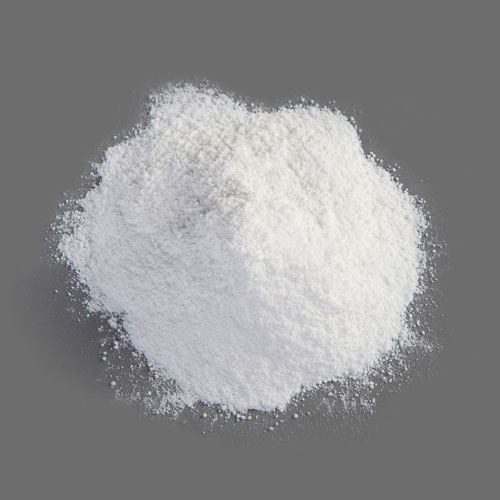
High-density polyethylene (HDPE) resin is a white powder or granular product with a density range of 0.941 to 0.960 g/cm³, a crystallinity of over 65%, and is non-toxic and non hygroscopic. This material has excellent heat and cold resistance, good chemical stability, high rigidity and toughness, excellent mechanical strength, good barrier properties, dielectric properties, and resistance to environmental stress cracking.
HDPE's Performance
Mechanical Properties
High strength, high rigidity, good creep resistance: HDPE has high tensile strength and impact resistance and a hard texture; it is not prone to permanent deformation under sustained stress.
Physical properties
High density, high melting point, low transparency, low permeability: The density range of high-density polyethylene is 0.941-0.960 g/cm³; The melting point is relatively high, usually between 125°C and 135°C, and the short-term use temperature can reach 100°C; crystalline and amorphous regions have different refractive indices for light, resulting in light scattering. Therefore, HDPE usually appears as a semi transparent or opaque milky white color. The dense crystalline structure can effectively block water vapor and has excellent moisture resistance, but its barrier properties against gases such as oxygen and carbon dioxide are generally average.
Chemical Properties
Excellent chemical stability, solvent resistance, poor oxidation resistance: As a nonpolar material, it has good corrosion resistance to most acids, bases, salt solutions, and organic solvents and is insoluble in any solvent at room temperature. Can dissolve in certain hydrocarbon and chlorinated hydrocarbon solvents (such as toluene and trichloroethane) at high temperatures; Under the action of ultraviolet light (sunlight) or high temperature, molecular chains may undergo oxidative degradation, leading to material brittleness and decreased performance. Therefore, antioxidants and ultraviolet absorbers are usually added.
Fuel-Grade HDPE vs. Standard
Standard HDPE (commonly used for packaging milk, drinking water, and detergents) without special treatment has a loose molecular chain structure, and gasoline has strong solvent properties. Its molecules are easy to penetrate through ordinary HDPE, and although there is no obvious liquid leakage, they will continue to emit flammable fuel vapor, producing a pungent odor and posing a safety hazard; Moreover, gasoline and E10 modern blended fuel containing 10% ethanol will gradually soften and corrode ordinary HDPE materials, causing container expansion, aging and degradation, which can easily lead to leakage or rupture. At the same time, the hygroscopicity of ethanol is prone to water absorption, moisture absorption, microbial growth, and damage to fuel quality.
Fuel grade HDPE is treated with a special fluorination process, in which fluorine atoms combine with the surface of polyethylene to form a dense protective barrier. It can permanently block fuel penetration, prevent flammable vapor leakage, and resist long-term corrosion of gasoline, avoiding softening and aging of container structures. It can also effectively isolate humid air, reduce moisture inhalation, maintain fuel stability and integrity, and is a specialized material suitable for gasoline storage, far exceeding the safety and durability of ordinary HDPE.
How Long Can You Store Petrol in a Plastic Container?
The physical lifespan of dedicated fuel-grade HDPE containers is highly dependent on environmental control. Storing in a cool and dark place can effectively delay the UV degradation of polymers, ensuring their structural strength for more than ten years. Its core barrier process has permanent effectiveness in normal environments.
Related Search:




Previous page:
Blog update
What are the types of chemical materials
2024-11-05
What do chemical materials do?
2024-11-05
What are the industrial chemicals
2024-11-05