

A Complete Guide to Organometallic Catalysts
2026-05-26
Many organometallic compounds, such as alkyl compounds and carboxylates of lead, tin, titanium, antimony, mercury, zinc, bismuth, zirconium, and aluminum, exhibit catalytic activity in the isocyanate-hydroxyl reaction.
Alkali metal and alkaline earth metal salt compounds, due to their strong basicity, can also serve as catalysts for polyurethane foam plastics. Examples of such compounds include sodium methoxide, potassium isooctanoate, and potassium oleate. For instance, potassium acetate and potassium oleate are primarily used as catalysts for polyisocyanurate (PIR) foam plastics.

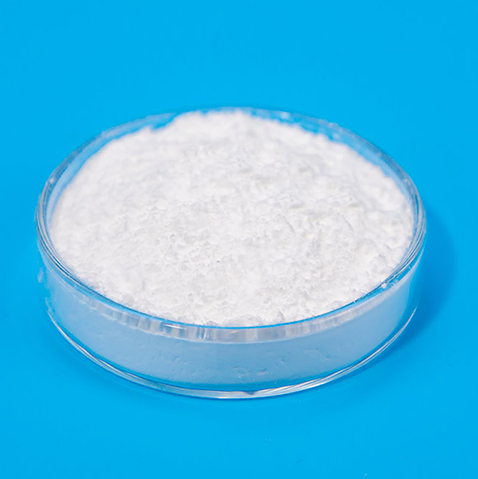

Potassium Carboxylate Catalysts
Potassium 2-Ethylhexanoate
Potassium 2-ethylhexanoate is a white powder (CAS No. 3164-85-0) with a purity of ≥97% and moisture content of ≤2%. It is soluble in water and has a pH of 7.0–9.5. Potassium 2-ethylhexanoate, used as a catalyst in polyurethane production, is supplied in solution form.
Applications
Potassium isooctanoate is a low-cost triol catalyst for polyurethane rigid foam. It is best suited for high-viscosity polyol formulations. It is highly reactive and is used in foaming formulations for spray-applied rigid foam, PIR (heat-resistant) rigid foam, and PU rigid foam products. It can also be used in the manufacture of polyurethane coatings and polyester resins (in combination with cobalt compounds), among other applications.
Potassium Oleate
Potassium oleate is a potassium-based catalyst. It is a pale yellow to brownish-yellow solid (CAS 143-18-0) that is highly soluble in water and has alkaline properties. The impure form is an oily liquid; the active ingredient content is ≥97%, and the moisture content is ≤3%.
Properties
Melting point | 235-240 °C |
Boiling point | 360 °C at 760 mmHg |
Flash point | 140 °C |
Vapor pressure | 3.7E-06 mmHg at 25 °C |
Applications
Potassium oleate is primarily used as a catalyst for polyurethane foam, specifically for catalyzing polyisocyanurate reactions. It can replace organotin compounds as well as other tertiary amine and alcoholamine compounds, and when used in combination with other catalysts, it is suitable for both cast and spray-applied rigid foam processes. It exhibits excellent performance during foaming, featuring high activity and stability, as well as rapid foaming, fast gelation, and low cost.
Organic Heavy Metal Catalysts
Organic lead and organic mercury compounds can be used as catalysts for room-temperature-curing polyurethanes with good results.
Lead octoate
Lead octoate is a chemical substance with CAS number 301-08-6. Pure or highly concentrated lead octoate is a pale yellow, viscous, transparent liquid. The relative density of pure, solvent-free lead octoate is 0.99–1.01, and its lead content is 37.0% ± 0.5%. Due to the high viscosity of pure lead isooctanoate, which makes it difficult to handle, it is generally mixed with a plasticizer to form a solution of a specific concentration for use.
Applications
Lead octoate is used as a catalyst in paving material systems such as polyurethane running tracks. It serves as a catalyst for various air-drying coatings and offers excellent storage stability. Compared to traditional lead naphthenate, it features a lighter color, lower odor, higher concentration, and superior drying performance. When used in light-colored coatings, it demonstrates even better properties, reducing the film’s color intensity and enhancing gloss.
Phenylmercury Acetate
Phenylmercury acetate is a white or slightly yellow crystalline powder that is hygroscopic (CAS No. 62-38-4).
Properties:
CAS Number | 62-38-4 |
Melting Point | 148 to 151 ℃ |
Water Solubility | Slightly soluble |
Density | 2.4 g/cm³ |
Appearance | White crystalline powder |
Risk Phrases | R34; R48/24/25; R50/53 |
Applications
Phenylmercury acetate is a specialty catalyst that exhibits virtually no catalytic activity toward isocyanate-water reactions but catalyzes isocyanate-hydroxyl reactions. Polyurethanes produced using this catalyst do not develop bubbles due to trace amounts of moisture. It is primarily used in polyurethane elastic plastic running tracks. Low-concentration phenylmercury acetate is also used as a biocide and for other applications. Phenylmercury acetate is highly toxic; special care must be taken to protect against dust exposure.
Zinc Carboxylate and Bismuth Carboxylate
Zinc carboxylate and bismuth carboxylate are environmentally friendly catalysts that can replace toxic heavy-metal catalysts such as lead isooctanoate and mercury acetate.
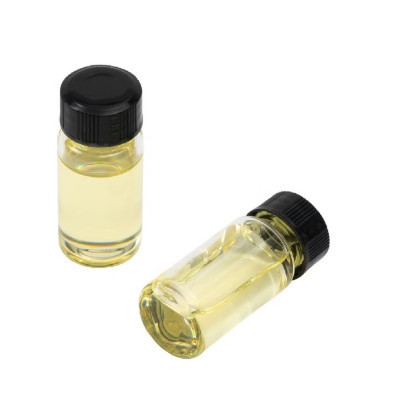
Zinc 2-Ethylhexanoate
Zinc 2-ethylhexanoate is a pale yellow or water-white transparent liquid (CAS No. 136-53-8) with a density of 1.17 g/cm³ and a flash point of 40°C. It is soluble in organic solvents. It has a stable acid value and excellent storage stability, and compared to traditional zinc naphthenate, it has a lighter color and a milder odor.
Properties:
Molecular Weight | 351.80 |
Appearance | Light yellow transparent liquid or water-white transparent liquid |
Solubility | Completely soluble |
Solution Stability | Transparent without precipitates |
Flash Point | 40 ℃ |
Density | 1.17 g/cm³ |
Applications
Zinc 2-ethylhexanoate is primarily used as a catalyst in polyurethane coatings and elastomers, where it promotes the cross-linking of aliphatic isocyanates and shortens curing times. It also serves as a heat stabilizer for PVC plastics, a wetting agent for coatings, a suspending agent, and a gelling agent for inks. It is significantly less toxic than lead isooctanoate and can partially replace it. Its catalytic activity is lower than that of lead isooctanoate. The recommended usage is 0.03%–0.2% (metal relative to resin solids).

Bismuth Octoate
Organobismuth catalysts are primarily based on bismuth carboxylates, particularly bismuth isooctanoate.
Bismuth octoate is a brownish-yellow viscous liquid with CAS number 67874-71-9, a relative density (at 25°C) of 1.28–1.34, and a viscosity (at 25°C) of no more than 3 Pa·s.
Applications
Bismuth octoate can be used as a paint drying agent, a lubricant additive, and a room-temperature catalyst for polyurethanes. Bismuth octoate has technical properties very similar to those of lead; it can serve as a substitute for lead-based drying agents, significantly enhance the effectiveness of cobalt-based drying agents, and improve the drying performance of coatings under harsh weather conditions, particularly in environments with high humidity.
Titaniumate catalysts
Among titanate catalysts, the most commonly used are tetrabutyl titanate and tetraisopropyl titanate, which are primarily used as catalysts in the synthesis of polyester polyols and other applications.
Tetrabutyl Titanate
Tetrabutyl titanate is a moisture-sensitive, colorless to pale yellow oily liquid (CAS 5593-70-4). with a boiling point of approximately 312°C, a freezing point of –55°C, a density (at 20°C) of 0.996 g/mL, and a flash point of 77°C (closed cup). It is primarily used as a catalyst for ester exchange reactions and as a modifier for polymeric materials. Its properties include high-temperature resistance (coating heat resistance up to 500°C), the ability to enhance surface adhesion of materials, and the function of regulating hydrolysis rates. Tetrabutyl Titanate reacts very readily with polar groups such as amino, hydroxyl, carboxyl, and amide groups, and is particularly prone to hydrolysis with water. It is soluble in a variety of organic solvents, except for ketones.
Applications
Tetrabutyl titanate is an organic titanium compound used as a catalyst for polycondensation and cross-linking reactions. It is primarily employed in esterification and transesterification reactions, such as the synthesis of polyester polyols. It is also used as a tackifier for metal-plastic composites, a modifier for high-strength polyester coatings, and a cross-linking agent.
Titanium Tetraisopropanolate
Titanium tetraisopropanolate is an organic compound. Under normal conditions, it is a colorless to pale yellow, transparent, homogeneous liquid with no odor. It emits fumes in humid air and is soluble in organic solvents such as anhydrous ethanol, diethyl ether, benzene, and chloroform. Titanium tetraisopropanolate decomposes rapidly upon contact with water and is extremely sensitive to moisture. When exposed to moisture, it forms flammable isopropanol and hydrated titanium oxide; when heated, it cures and transforms into a resinous substance.
Properties:
Molecular Weight | 284.215 |
Melting Point | 14 to 17 ℃ |
Boiling Point | 232 ℃ |
Density | 0.96 g/cm³ |
Appearance | Colorless to light yellow liquid |
Flash Point | 23 ℃ |
Risk Phrases | R10; R36 |
Applications
Tetraisopropyl titanate is a highly active organic alkoxytitanate. It is primarily used as a crosslinking agent in non-aqueous systems, a catalyst for the synthesis of polyester and ester plasticizers, and an organic titanium coupling agent (surface modifier and adhesion promoter). As an esterification catalyst, it is used in concentrations ranging from 0.01% to 1% and is typically added as the final reactant. The temperature for ester exchange reactions is below 100°C, while esterification reactions (such as those for producing plasticizers) require temperatures above 180°C.
Previous page:
Next page:
Blog update
What are the types of chemical materials
2024-11-05
What do chemical materials do?
2024-11-05
What are the industrial chemicals
2024-11-05