

An Overview to Catalysts
2026-05-25

Catalysts act as accelerators for many chemical reactions. They are an important additive in the synthesis of resins, and polyurethane is no exception. Catalysts shorten reaction times, improve production efficiency, selectively promote the main reaction, and suppress side reactions. In the production of many polyurethane products, catalysts are commonly used additives; although used in small quantities, they play a significant role.
Although small amounts of inorganic salt compounds and organophosphorus oxides can be used as polyurethane catalysts, the two main categories of catalysts that are convenient to use and commonly employed in the synthesis of polyurethanes and their raw materials are tertiary amine catalysts (including their quaternary ammonium salts) and organometallic compounds.
Organometallic Catalysts
Many organometallic compounds, such as alkyl compounds and carboxylates of lead, tin, titanium, antimony, mercury, zinc, bismuth, zirconium, and aluminum, exhibit catalytic activity in the isocyanate-hydroxyl reaction. However, in the production of polyurethane foam, organotin compounds are particularly important, especially stannous octoate and dibutyltin dilaurate, which can be used in polyurethane foams, adhesives, elastomers, and other applications.
Alkali metal and alkaline earth metal salt compounds, due to their strong basicity, can also serve as catalysts for polyurethane foam. Examples of such compounds include sodium methoxide, potassium isooctanoate, and potassium oleate. For instance, potassium acetate and potassium oleate are primarily used as catalysts for polyisocyanurate (PIR) foam.
Organotin Catalysts
Dibutyltin Dilaurate
Dibutyltin dilaurate, abbreviated DBTDL, is a catalyst with strong gelling properties and can be used in elastomers, adhesives, sealants, coatings, rigid foams, molded foams, and RIM applications. It can be used in conjunction with amine catalysts for the high-speed production of high-density structural foams, spray-applied rigid foams, and rigid foam panels. Dibutyltin dilaurate also serves as a thermal stabilizer, primarily used in the processing of PVC flexible products, as a catalyst for silicone rubber, and as a light and heat stabilizer for polyamide and phenolic resins.

Properties
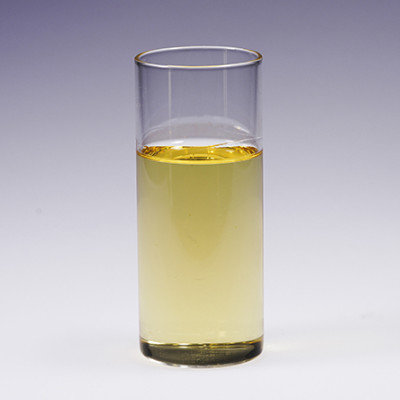
Dibutyltin dilaurate is a pale yellow, transparent, oily liquid that is soluble in common plasticizers and solvents but insoluble in water.
Tin content / % | 18.6±0.6 |
Viscosity (25℃) / (mPa·s) | 40∼50 |
Density (25℃) / (g/cm³) | 1.04∼1.08 |
Flash point (COC) / ℃ | 235 |
Refractive index (20℃) | 1.468∼1.475 |
Boiling point / ℃ | >205 |
Freezing point / ℃ | 12∼20 |
Dibutyltin Octanoate
Stannous octanoate is a pale yellow, oily liquid that is soluble in polyols and most organic solvents but insoluble in alcohols and water. It is relatively non-toxic. It is used as a catalyst in polyurethane production, primarily in the manufacture of flexible block polyether-based polyurethane foam. It can also serve as a catalyst for polyurethane coatings, elastomers, and room-temperature-curing silicone rubber. As a divalent tin compound, it may be oxidized to a tetravalent tin compound after foaming, remaining within the foam structure to act as an anti-aging agent. Its presence in the foam after foaming does not adversely affect the foam’s performance.
Properties
Tin content / % | 28.0±0.5 |
Viscosity (25℃) / (mPa·s) | ≤500 |
Density (25°C) / (g/cm³) | 1.25±0.02 |
Refractive index (20℃) | 1.495±0.005 |
Boiling point / °C | -25 |
Freezing point / ℃ | 142 |
Dibutyltin Dilaurylmercaptide
D-butyltin dilaurylmercaptide belongs to the dibutyltin mercaptide class, with CAS Number 1185-81-5. It is an oily liquid with a relative density of 1.02–1.04, a viscosity (at 25°C) of approximately 20 mPa·s, a flash point (closed cup) of approximately 121°C, a boiling point of 185°C, a refractive index of 1.4992, and a vapor pressure of 1.3 kPa. It is insoluble in water.
A strong gel-forming catalyst with good hydrolytic stability, it exhibits higher catalytic activity than DBTDL and is storage-stable. It is used in soft foam, semi-rigid foam, microcellular elastomers, and rigid foam. It is thermally active, with the catalytic reaction starting slowly and then increasing rapidly.
Dibutyltin Diacetate
Dibutyltin diacetate, abbreviated as DBTAC, is a gel catalyst. It is a colorless to pale yellow oily liquid with a relative density (at 25°C) of approximately 1.30 and a refractive index (at 25°C) of 1.46–1.47. Its boiling point is 142–145°C (1.33 kPa), its freezing point is 8–10°C, its flash point is 146°C (open cup) or 143°C (closed cup), its vapor pressure is approximately 173 Pa, and its pH is >5.00. The tin content is 32.0%–33.8%. It is insoluble in water.
Dibutyltin diacetate is primarily used as a room-temperature curing catalyst for silicone rubber, particularly for acetoxy-type silicone products. It is characterized by a faster catalytic rate than dibutyltin dilaurate. It can be used in polyurethane elastomers, spray-applied rigid polyurethane foam, and high-resilience molded rigid foam.

Previous page:
Blog update
What are the types of chemical materials
2024-11-05
What do chemical materials do?
2024-11-05
What are the industrial chemicals
2024-11-05