

An Overview to Other Light-Stabilizing Additives: Definition and Application
2026-05-22
In addition to the ultraviolet absorbers and hindered amine light stabilizers mentioned above, there are other light stabilizers that can be used in polyurethane systems.
UV absorber UV-2
UV absorber UV-2 is an organic compound with a molecular weight of 296.4 and CAS Number 65816-20-8. It appears as a white to pale yellow powder or crystal with a melting point of ≥90°C. By absorbing ultraviolet radiation, it slows down the photodegradation of polymeric materials and acts as a stabilizer.
UV-2 is primarily used to modify polymeric materials such as polyurethane, polypropylene, acrylonitrile-butadiene-styrene copolymers, and polyethylene, enhancing the materials’ durability under light exposure. Its molecular structure contains benzene rings and amide groups, enabling energy conversion and dissipation through intramolecular hydrogen bonding, making it suitable for both high-density and low-density polyethylene products. It is particularly suitable for colorless unsaturated resins.


UV-P
UV-P belongs to the category of light stabilizers. It is a white to pale yellow crystalline powder or fine granules with a melting point range of 128–132°C and a density of 1.38 g/cm³. It is insoluble in water, slightly soluble in acetone and ethyl acetate, and soluble in chloroform and other solvents. Its purity is generally ≥99%. It is virtually non-toxic, odorless, and approved for use in food contact containers.
UV-P is a highly effective UV absorber belonging to the hydroxyphenol-benzotriazole class, capable of strongly absorbing ultraviolet radiation in the 270–340 nm wavelength range. It absorbs virtually no visible light, making it particularly suitable for colorless and light-colored transparent products.
UV-234
UV-234 is a pale yellow powder at room temperature, with a melting point of 137–141°C, a relative density of 1.22 g/cm³, and a flash point of 383°F (approximately 195°C). It provides protection primarily by converting ultraviolet radiation into thermal energy and is suitable for UV protection in polyethylene (PE), polypropylene (PP), polyester materials, and coating systems. Industrial production employs a five-step synthesis method, with the key coupling reaction of the intermediate yielding a yield of up to 94%.
UV Absorber 531
UV Absorber 531 is an anti-aging additive with a molecular weight of 326.4. It is a pale yellow crystalline powder with light transmittance exceeding 90% and 95% at wavelengths of 450 nm and 500 nm, respectively. It is insoluble in water, slightly soluble in ethanol, and soluble in the plasticizer DOP. Typical product purity is ≥99.5%, with a melting point of 47–50°C. By absorbing ultraviolet radiation in the 240–340 nm wavelength range, this substance delays yellowing and the degradation of physical properties in polymer materials. It is non-toxic, exhibits low migration, and has excellent compatibility with materials.
UV-531 provides maximum protection for polymers, helps reduce discoloration, and simultaneously delays yellowing and inhibits the loss of physical properties. It is widely used in PE, PVC, PP, PS, PC, acrylic glass, polypropylene fiber, and ethylene-vinyl acetate copolymers. Furthermore, it provides excellent light stability for air-drying phenolic and alkyd varnishes, polyurethanes, acrylics, epoxies, and other air-drying products, as well as automotive refinish paints, powder coatings, polyurethanes, and rubber products. Usage: 0.1%–0.5%.
UV-1229
UV-1229 is a highly effective liquid composite stabilizer. It appears as a pale yellow, transparent, viscous liquid and is suitable for a wide range of polymers and applications, including polyurethanes (such as foam plastics), sealants, adhesives, elastomers, unsaturated polyesters, acrylics, vinyl polymers (PVB, PVC), styrene homopolymers and copolymers, polyolefins, liquid color concentrates, and other organic matrices. It provides particularly effective anti-yellowing protection for PU foams. Depending on the specific requirements of the matrix and the desired application performance, the recommended addition level for UV-1229 ranges from 0.1% to 3.0%.
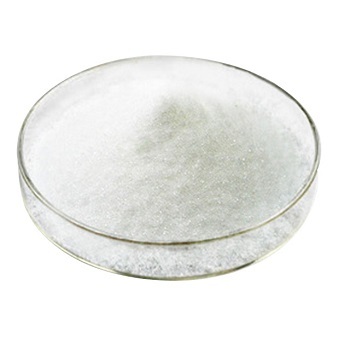
UV absorber UV-1164
UV absorber UV-1164 is an o-hydroxyphenyl triazine-based light stabilizer with a molecular weight of 509.68. It appears as a pale yellow powder with a melting point of 87–89°C, a relative density of 1.089 g/cm³, volatile matter of ≤0.5%, ash content of ≤0.1%, and a purity of ≥99% (HPLC). Its maximum absorption wavelength covers the 300–400 nm range, and it features high molecular weight, low volatility, and excellent thermal stability.
UV-1164 is synthesized via a two-step Friedel-Crafts reaction: first, a di-substituted intermediate is produced by acylation of trichloroisocyanuric acid with m-xylene, followed by condensation with 1-chloro-n-octane to form the final product, with a purity >99% and a yield >70%. It is primarily used in engineering plastics such as polyamide (PA), polyester (PET/PBT), and polycarbonate (PC). The recommended addition level is 0.1%–0.3%, and it can be blended with other additives.
Light Stabilizer 944
Light Stabilizer 944, also known as the hindered amine light stabilizer HS-944, is a polymeric hindered amine light stabilizer (HALS) with a molecular weight range of 2000–3100 and a melting point of 100–135°C. It appears as a white or pale yellow powder and has a melting range of 100–135°C, a volatile content (105°C, 2 h) of ≤0.5%, an ash content of ≤0.5%, a relative density of 1.01, a bulk density of 450–550 g/L, and a weight loss at 300°C of 1%. Soluble in organic solvents such as acetone, ethyl acetate, benzene, dichloromethane, and chloroform; slightly soluble in alcohols; insoluble in water (<0.01%).
Light Stabilizer 944 is suitable for polyolefins (PP, PE), nylon, polyester, EVA film, ABS, polystyrene, and food packaging materials. It prevents the loss of mechanical strength and yellowing caused by photoaging.
Light Stabilizer 783
Light Stabilizer 783 is a 1:1 mixture of Light Stabilizer 944 and Light Stabilizer 622. It has a molecular weight of ≥2000, appears as a white to yellow powder or granules, has a melting range of 55–140°C, and a bulk density of 0.51 g/cm³. It is a synergistic compound of polymeric, high-molecular-weight hindered amine light stabilizers, offering excellent processing thermal stability, good compatibility, and resistance to water extraction. As a general-purpose light stabilizer suitable for many polymers, it is primarily used in polyolefins and is also applicable to polyamides, polyurethane elastomers, and engineering plastics such as ABS.


Tinuvin 5050, 5060, 5151
Tinuvin 5050, 5060, and 5151 are all composite light-stabilizing additives consisting of benzotriazole UV absorbers and hindered amine light stabilizers (HALS). all of which appear as amber-colored viscous liquids. They are suitable for clear coats, pigmented paints, water-based systems, and solvent-based systems and can be used in single-component or two-component polyurethane coatings, wood finishes, and similar applications, with a usage rate of 1% to 3%.
Previous page:
Blog update
What are the types of chemical materials
2024-11-05
What do chemical materials do?
2024-11-05
What are the industrial chemicals
2024-11-05