

What Is Ammonium Chloride?
2026-06-10
Contac Kerton Chemical Right Now!!!
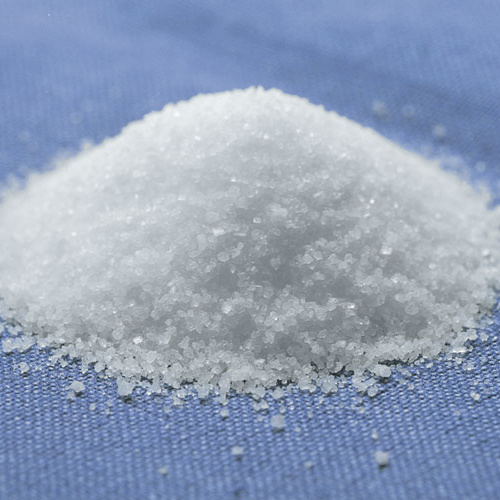
In the production process of soda ash via the combined soda-lime process, ammonium chloride is the primary byproduct. This substance appears as a white crystalline solid and is highly hygroscopic; during routine storage, it readily absorbs moisture from the air, leading to caking. Additionally, it has poor thermal stability and decomposes spontaneously at high temperatures. When dissolved in water, ammonium chloride undergoes hydrolysis; if heated continuously, it decomposes to produce two gases: ammonia and hydrogen chloride. Furthermore, this substance is chemically reactive; it can react with various alkaline oxides as well as with sulfuric acid, yielding ammonium bisulfate and hydrogen chloride.

Ammonium chloride has a wide range of applications spanning multiple sectors in industry and agriculture. In industrial settings, it is commonly used in routine operations such as metal welding, electroplating, leather tanning, and dry cell battery manufacturing. In mineral flotation processes, it is utilized to inhibit arsenic minerals; in the metal smelting industry, it can be used to leach non-ferrous metals as well as to purify various rare and precious metals. Furthermore, it serves as a flux in tin-plating and zinc-plating processes, is commonly used to remove rust from metal surfaces, and is an indispensable electrolyte component in the production of carbon-zinc dry batteries. In agriculture, ammonium chloride is a highly cost-effective, fast-acting nitrogen fertilizer suitable for the fertilization needs of various common crops, including rice, wheat, and cotton.
Physical Properties of Ammonium Chloride
Appearance | White crystalline solid |
Boiling point | 520 °C |
Melting point | 337.8 °C |
Density | 1.527 g/cm³ |
Solubility | Soluble in water and glycerol; slightly soluble in ethanol, isopropanol, and n-butanol; insoluble in acetone, diethyl ether, and ethyl acetate. |
Safety Statements | S22-S36-S26 |
European Risk Phrases | R22/R36 |
European Hazard Code | Xn: Harmful |
Chemical Properties of Ammonium Chloride
Thermal Decomposition
When ammonium chloride is heated, it undergoes thermal decomposition, releasing ammonia gas and hydrogen chloride; as these two gases rise, they react again with the surrounding environment once the temperature drops, reforming ammonium chloride.
Reaction with Sulfuric Acid
When sulfuric acid comes into contact with ammonium chloride, a stepwise reaction is triggered: the two initially react to form ammonium bisulfate and hydrogen chloride; subsequently, the newly formed ammonium bisulfate reacts a second time with the remaining ammonium chloride, ultimately producing ammonium sulfate while releasing hydrogen chloride gas.
Reaction with Ammonium Bisulfate
First, ammonium chloride crystals are converted to a gaseous state through heating, and then the vaporized ammonium chloride is passed into a molten system of ammonium bisulfate or sodium bisulfate. In this reaction environment, the ammonium chloride undergoes complete decomposition, and the overall reaction products are hydrogen chloride gas and ammonia gas.
What Is Ammonia Chloride Used For?
Catalyst
Ammonium chloride offers advantages such as low cost, non-toxicity, environmental friendliness, ease of handling, and simple post-treatment; it generally does not require strict reaction conditions such as anhydrous or oxygen-free environments. Developing organic synthesis reactions catalyzed by ammonium chloride holds potential theoretical and industrial value.
Fertilizer
Ammonium chloride enhances both yield and quality in field and horticultural crops. Its yield-enhancing effect is superior to that of urea. Ammonium chloride reduces fruit acidity while increasing sugar and vitamin C content, thereby improving fruit quality. Long-term application of ammonium chloride can lead to a gradual accumulation of chloride ions in the soil and a decrease in soil pH, but it does not affect other physicochemical properties. The application of ammonium chloride can weaken nitrification in the soil, thereby reducing nitrogen leaching and losses due to denitrification. However, ammonium chloride has poor flowability, cannot be applied mechanically, and is prone to caking, which significantly limits its market share as a fertilizer.
Battery materials
The main types of modern zinc-manganese batteries are high-zinc-chloride batteries and alkaline-manganese batteries; however, ammonium-chloride-type zinc-manganese batteries are characterized by their low cost, ease of mass production, and performance that meets the needs of the general public.
Safety and Storage
Toxicity: Harmful if inhaled, ingested, or absorbed through the skin; irritating to the eyes, skin, and mucous membranes.
Storage: Store in a cool, well-ventilated, dry, and clean warehouse. Do not store or transport together with acids or toxic substances.
FAQS
| Is ammonium chloride harmful to humans? | Yes, ammonium chloride is harmful to humans if mishandled, inhaled, or ingested in large quantities. |
| What is ammonia chloride used for? | Ammonium chloride is used in metal welding, electroplating, leather tanning, and the manufacture of dry cell batteries, among other applications. In agriculture, it serves as a nitrogen fertilizer. In medicine, it is used as an expectorant. |
Related Search:



Previous page:
Next page:
Blog update
What are the types of chemical materials
2024-11-05
What do chemical materials do?
2024-11-05
What are the industrial chemicals
2024-11-05