

What is Methyl Chlorosilane?
2026-06-08
Contact Kerton Chemicals Right Now!!!
What Is Silicone?
Silicones, also known as silicone or siloxanes, are organic polymers composed of cross-linked siloxane units. They possess excellent properties—such as cold resistance, heat resistance, oxidation resistance, and electrical insulation—that are not found in general organic polymers.
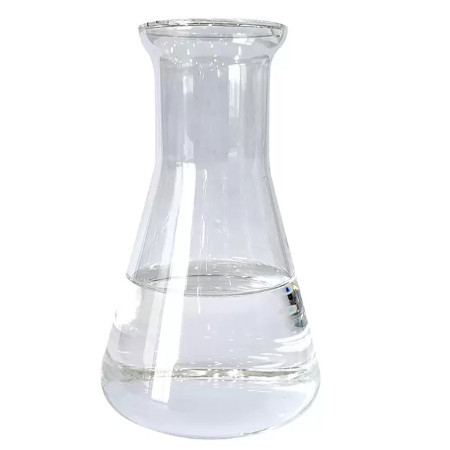


Silicone materials are primarily divided into four major product categories: silicone rubber, silicone oil and secondary processed products, silicone resins, and silane coupling agents. Due to their excellent properties—including electrical insulation, radiation resistance, flame retardancy, corrosion resistance, resistance to high and low temperatures, diverse forms, and physiological inertness—silicone products are hailed as the “MSG of industry” and are widely used in various sectors such as electronics and electrical engineering, construction and building materials, textiles, light industry, healthcare, machinery, transportation, and plastics and rubber.

Currently, there is a vast array of silicone products, which can be broadly categorized into three main groups: raw materials, intermediates, and finished products:
1. Silicone Monomers: These primarily refer to monomers used to synthesize silicone polymers, such as organochlorosilanes, including methyl chlorosilane, phenyl chlorosilane, and vinyl chlorosilane.
2. Silicone Intermediates: These primarily refer to linear or cyclic siloxane oligomers, such as hexamethyl disiloxane (MM), octamethylcyclotetrasiloxane (D4), and dimethylcyclosiloxane mixtures (DMC).
3. Silicone products and articles: Silicone products are produced by polymerizing intermediates and adding various inorganic fillers or modifying additives.
What is Chlorosilane?
Chlorosilanes are typically produced by direct synthesis, in which silicon powder is mixed with methyl chloride (CH₃Cl) gas to yield these compounds. At room temperature, they are colorless gases that are highly volatile; they hydrolyze readily upon contact with moisture and produce fumes when exposed to air. In a completely dry environment, silane is chemically stable and has virtually no effect on various metals; it does not react even when exposed to metallic sodium. The resulting products in the methyl silane series—such as trimethyl silane, dimethyl silane, and methyl silane—serve as the most fundamental core raw materials for the production of various organosilicon materials.


Types of Methyl Chlorosilane
Within the silicone industry chain, organochlorosilanes—which include key categories such as methylchlorosilane, phenylchlorosilane, and vinylchlorosilane—serve as the core raw materials underpinning the development of the entire silicone industry, with methylchlorosilane occupying a central pillar position within the sector.
The research, development, and production of the vast majority of silicone polymers on the market rely on dimethyldichlorosilane as the core raw material, which is first synthesized to form the basic polydimethylsiloxane backbone. Building on this foundation, the industry introduces functional groups such as phenyl, vinyl, chlorophenyl, and fluoroalkyl groups tailored to specific application requirements, modifying and optimizing the base material to meet the demands of various specialized operating conditions and high-end applications.
Dichloromethylsilane CAS 75-54-7
Properties:
Appearance | Colorless liquid |
Density | 1.105 g/cm³ |
Melting point | -93°C |
Boiling point | 41 °C |
Flash point | -9°C (CC) |
Critical pressure | 3.95 MPa |
Autoignition temperature | 290 °C |
Refractive index | 1.398 (20 °C) |
Saturated vapor pressure | 46.78 kPa (20 °C) |
Upper explosive limit (V/V) | 55.0% |
Lower explosive limit (V/V) | 2.4% |
Solubility | Soluble in benzene, diethyl ether and heptane |
Dichlorodimethylsilane CAS 75-78-5
Dichlorodimethylsilane is an organic compound that appears as a colorless liquid with a melting point of -76°C, a boiling point of 70°C, and a density of 1.07 g/cm³. It is soluble in benzene and diethyl ether, emits fumes in moist air, is flammable, and reacts violently with water.
Dichlorodimethylsilane is primarily used in the production of dimethyl siloxane oil, silicone rubber, silicone resins, and other organosilicon materials and can also serve as a raw material for silanization agents and fabric moisture-proofing agents. Its vapors are highly irritating to the respiratory tract, eyes, and skin; exposure may cause chemical pneumonia or even pulmonary edema. Protective equipment must be worn during handling. In the event of a leak, isolate ignition sources and absorb the substance with sand or soil; use carbon dioxide or dry powder as fire extinguishing agents.
Properties:
Appearance | Colorless liquid |
Density | 1.07 g/cm³ |
Melting point | -76°C |
Boiling point | 70 °C |
Flash point | -9°C (CC) |
Critical pressure | 3.49 MPa |
Autoignition temperature | 398.9 °C |
Refractive index | 1,500 (20 °C) |
Upper explosive limit (V/V) | 9.5% |
Lower explosive limit (V/V) | 3.4% |
Solubility | Soluble in benzene and diethyl ether |
Methyltrichlorosilane CAS 75-79-6
Properties:
Melting point | -77°C |
Boiling point | 66 °C |
Density | 1.273 g/cm³ |
Appearance | Colorless liquid |
Flash point | -9°C (CC) |
Refractive index | 1.411 (20 °C) |
Saturated vapor pressure | 17.9 kPa (20 °C) |
Critical pressure | 3.53 MPa |
Autoignition temperature | 490 °C |
Upper explosive limit (V/V) | 11.9% |
Lower explosive limit (V/V) | 7.2% |
Solubility | Soluble in benzene and diethyl ether |
Chlorotrimethylsilane CAS 75-77-4
Chlorotrimethylsilane is a colorless, transparent liquid with a pungent odor. It is primarily used as an intermediate in the manufacture of silicone oils, as a water-repellent agent, and as an analytical reagent.
Properties:
Appearance | Colorless transparent liquid |
Density | 0.854 g/cm³ (25 °C) |
Melting point | -40 °C |
Boiling point | 57 °C |
Flash point | -18 °C (OC) |
Refractive index | 1,500 (20 °C) |
Saturated vapor pressure | 26.7 kPa (20 °C) |
Critical pressure | 3.36 MPa |
Autoignition temperature | 395 °C |
Upper explosive limit (V/V) | 6% |
Lower explosive limit (V/V) | 1.8% |
Solubility | Soluble in benzene, methanol, diethyl ether and perchloroethylene |
Previous page:
Next page:
Blog update
What are the types of chemical materials
2024-11-05
What do chemical materials do?
2024-11-05
What are the industrial chemicals
2024-11-05