

A Complete Guide to Polysulfide Sealant?
2026-07-06
Polysulfide sealant is made from liquid polysulfide rubber with mercaptan-terminated chains as the base material, combined with curing agents, additives, and fillers. During use, a cross-linked network is formed through the reaction between the liquid polysulfide rubber and the curing agent.

Characteristics of Polysulfide Sealant
Polysulfide sealants exhibit excellent resistance to air, jet fuel, fuel vapours, water vapour, nonpolar liquid media, and atmospheric conditions. They consistently maintain reliable adhesion to surfaces such as aluminium alloys, structural steel, titanium alloys, polyurethane primers, epoxy primers, resin-based composites, cement, glass, and many other materials, while maintaining certain tensile mechanical properties. It can flex without cracking at –55°C, ensures structural sealing under dynamic conditions, and maintains structural sealing long-term at 120°C. The most distinctive feature of polysulfide sealants is the presence of disulfide bonds in their molecular chains, which provide excellent resistance to nonpolar media such as fuel. They also have low gas permeability. These sealants are primarily used for bonding and sealing various components in the construction industry, in the manufacture of insulated glass units, and for specialized military applications such as integral aircraft fuel tanks, fuel compartments, and corrosion-resistant sealing of aircraft fuselages.
Formulation and Functions of Polysulfide Sealant
Polysulfide sealant consists primarily of a liquid polysulfide rubber base resin, a curing system, and other additives.
Liquid Polysulfide Rubber
Mercaptan-terminated liquid polysulfide (commonly known as liquid polysulfide rubber) is the most important component of polysulfide sealants and constitutes the main body of the sealant elastomer. It typically accounts for 40% to 70% of the formulation; when certain mechanical properties are not a priority, its content can be reduced to 30%.
Item | Data Range |
Appearance | Light yellow to reddish-brown transparent viscous liquid |
Density | 1.12~1.31 g/cm³ |
Moisture content | 0.1~0.2% |
pH value | 6~8 |
Impurities | 0.2~0.3% |
Combined sulfur | 37~40% |
Free sulfur content | 0.1~0.2% |
Viscosity (25℃) | 0.25~200 Pa·s |
Molar mass | 600~7500 g/mol |
Mercapto group content | 0.8~7.7% |
Crosslinker content (mole fraction) | 0.05~2.5% |
Refractive index | 1.557~1.570 |
Ignition point | 182~235 ℃ |
Fire point | 240~335 ℃ |
Glass transition temperature | Approx. -60 ℃ |
Specific heat capacity | Approx. 1.26 kJ/(kg·K) |
Flash point | >230 ℃ |
Heat of combustion | >24.075 kJ/(kg·K) |
The liquid polysulfide rubber commonly used to prepare polysulfide sealants is produced by condensation polymerization of three main monomers: dichloroethyl formaldehyde, sodium polysulfide, or sodium disulfide, and trichloropropane.
Vulcanization System
The vulcanisation system of polysulfide sealants consists of a vulcanising agent and a catalyst. Conventionally, at lower temperatures—such as above 0°C—the curing agent, under the influence of the catalyst, supplies highly reactive oxygen atoms to the liquid polysulphide rubber. These react with the reactive hydrogen atoms at the sulphur end groups of the molecules; every two sulphur end groups form a cross-linking point and release a water molecule. On average, each polysulfide molecule has more than two sulphur end groups, and further cross-linking transforms it into an elastomer.
Other Additives
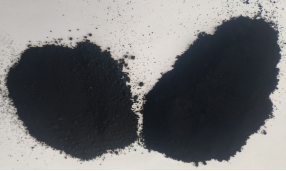




Additive Category | Main Function | Common Examples |
Reinforcing Agents | Improve the tensile mechanical properties of the cured sealant elastomer (tensile strength, tear strength, tensile bond strength, elongation), while reducing cost | Carbon black, calcium carbonate, zinc oxide, kaolin, silica |
Rheology Additives | Adjust viscosity, thixotropy and leveling: thixotropic agents increase viscosity and thixotropy; leveling agents reduce viscosity and improve flowability | Thixotropic agents: modified urea, fumed silica, stearatesLeveling agents: tributyl phosphate, dibutyl phthalate (DBP), butyl benzyl phthalate (BBP) |
Tackifiers / Adhesion Promoters | Enhance adhesion to metals, carbon fiber composites, organic coatings and existing sealant layers | Phenolic resins, ethylene oxide resins, alkoxysilane compounds, titanates, isocyanates(Now largely replaced by adhesion primers / coupling agents) |
Corrosion Inhibitors | Improve the anti-corrosion performance of sealants by forming a dense oxide film on metal surfaces | Dichromates (traditional, also act as curing agents, limited by environmental regulations)New eco-friendly corrosion inhibitors such as molybdates |
Sulfur Inhibitors / Viscosity Stabilizers | Prevent gradual viscosity increase of the base paste (containing liquid polysulfide rubber) during storage, improving process stability | Acidic substances such as stearic acid, oleic acid |
Mildew Inhibitors / Antifungal Agents | Improve mildew resistance of polysulfide sealants (original mildew resistance grade only 2~3) | Chloride-based mildew inhibitors |
Heat Stabilizers / Heat Resistant Agents | Improve the thermal stability of polysulfide sealants | Rare earth compounds, ferric oxide (Fe₂O₃), amine antioxidants |
Colorants / Pigments | Impart desired color to the sealant for color matching | Titanium dioxide, carbon black, ferric oxide, phthalocyanine green and other pigments |
Previous page:
Next page:
Blog update
What are the types of chemical materials
2024-11-05
What do chemical materials do?
2024-11-05
What are the industrial chemicals
2024-11-05