

Diethylenetriamine (DETA)
2026-04-09
Introduction to Diethylenetriamine (DETA)

Diethylenetriamine CAS 111-40-0 is an organic compound with the systematic name N-(2-aminoethyl)-1,2-ethanediamine, abbreviated as DETA. It is also known as diethylenetriamine, triethylenediamine, and bis(2-aminoethyl)amine, among other synonyms. It is hygroscopic and forms white fumes in air; it is soluble in water and alcohols but insoluble in ethers, and its aqueous solution is strongly alkaline.
As an aliphatic amine, diethylenetriamine exhibits the chemical properties of both primary amines and secondary amines. It is basic and reacts with acids to form corresponding salts. It can undergo alkylation, acylation, and sulfonylation reactions and is prone to oxidation.
Diethylenetriamine (DETA) Properties
Name | Diethylenetriamine (DETA) |
|---|---|
Molecular Weight | 103.166 |
Melting Point | -40 ℃ |
Boiling Point | 206 ℃ |
Water Solubility | Easily soluble |
Density | 0.96 g/cm³ |
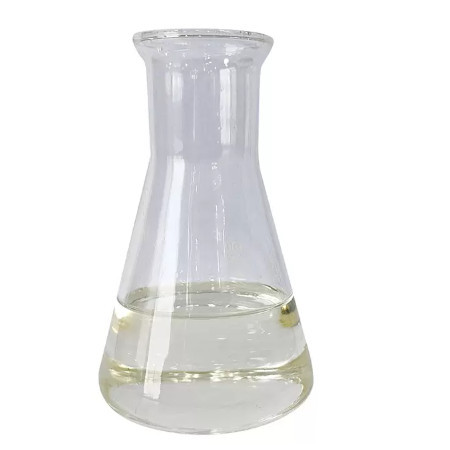
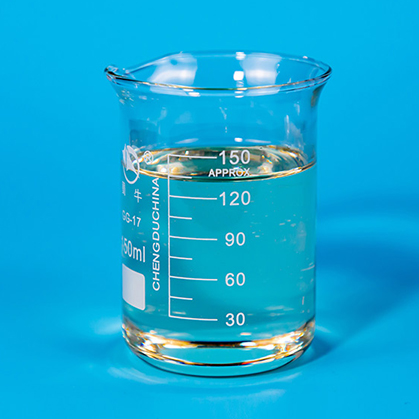
Appearance | Pale yellow liquid |
Safety Phrases | S26; S36/37/39; S45 |
Hazard Symbol | C |
Properties of DETA-Cured Epoxy Resin
Diethylenetriamine (DETA) features an extremely low viscosity and emits white fumes upon contact with air. When curing a bisphenol A epoxy resin with an epoxy equivalent of 185, the stoichiometric dosage is 11%. The typical properties of the fully cured resin are listed in the table.
Property | Data | Property | Data |
Heat Distortion Temperature (HDT)/°C | 95~124 | Izod Impact Strength (Notched)/kJ·m⁻¹ | 0.022 |
Flexural Strength/MPa | 100.0~120.0 | Hardness (Rockwell M) | 99~108 |
Flexural Modulus/MPa | 3500~3800 | Dielectric Constant (50Hz, 23°C) | 4.1 |
Compressive Strength/MPa | 116 | Dielectric Loss Tangent (50Hz, 23°C) | 0.009 |
Tensile Strength/MPa | 80 | Volume Resistivity/Ω·cm | 2×10¹⁶ |
Elongation at Break/% | 5.5 | Note: Dosage of DETA (by mass): | 10%~11% |
Effect of DETA Dosage on HDT
The dosage of DETA significantly impacts the HDT under fixed curing conditions. Post-curing at an elevated temperature yields superior results: for instance, post-curing after gelation at 100°C for 12 hours results in an HDT of 122°C, which is 48°C higher than the 74°C achieved at room temperature. This demonstrates that thermal curing significantly enhances the thermal properties of the resin.
DETA Content (w)/% | Curing Conditions | Heat Distortion Temperature (HDT)/°C |
8 | (25℃/3h)+(200℃/1h) | 95 |
9 | (25℃/3h)+(200℃/1h) | 105 |
10 | (25℃/3h)+(200℃/1h) | 114 |
11 | (25℃/3h)+(200℃/1h) | 119 |
12 | (25℃/3h)+(200℃/1h) | 124 |
| Ambient Temperature for 7d | 74 |
13 | (25℃/3h)+(200℃/1h) | 117 |
14 | (25℃/3h)+(200℃/1h) | 112 |
Diethylenetriamine (DETA) Applications
Diethylenetriamine has a wide range of applications, including the production of ion exchange resins, polyamide resins, paper reinforcement agents, photosensitive agents, fabric finishing agents, electroplating diffusion agents, electroplating brighteners, lubricant additives, emulsifiers, surfactants, ash-free additives, metal chelating agents, reactive dye intermediates, epoxy resin curing agents, etc. It can also be used as amine fuel for tactical missile propellants.
Related Search:


Previous page:
Next page:
Blog update
What are the types of chemical materials
2024-11-05
What do chemical materials do?
2024-11-05
What are the industrial chemicals
2024-11-05