

Epoxy Adhesives: Toughening Modification and Formulas
2026-04-22
What is Modified Epoxy Adhesive?

When the degree of cross-linking in epoxy resins is high, their toughness is often poor, and they lack resistance to impact and vibration, which severely limits their applications. As structural adhesives, they must undergo modification and toughening to improve their performance. “Toughening” refers to the process of increasing the toughness of the epoxy resin while maintaining the rigidity and temperature resistance of the epoxy matrix, thereby enhancing its impact resistance and peel strength.
There are many approaches to toughening epoxy adhesives, such as toughening with rubber elastomers, thermoplastic resins, interpenetrating network structures, the introduction of flexible chains, inorganic whiskers, in situ polymerization, and nanoparticles. When a single toughening method fails to meet performance requirements, multiple methods can be used simultaneously to enhance the toughening effect.
Rubber Elastomer Toughening
The traditional toughening modification uses rubber elastomers as toughening agents. The rubber elastomers used for toughening epoxy adhesives mainly include nitrile rubber, polybutadiene rubber, silicone rubber, polysulfide rubber, acrylic rubber, etc. Rubber morphology is also divided into solid rubber and liquid rubber, among which the toughening effect of active end group liquid rubber is significantly better than that of general rubber.
Thermoplastic Resin Toughening Modification
Rubber elastomers often experience a decrease in other properties while toughening epoxy resins. In order to maintain its heat resistance and modulus while toughening, high-strength, high toughness, high modulus, and high heat resistance thermoplastic resins such as polysulfone (PSF), polyetherimide (PEI), polyphenylene oxide (PPO), polyethersulfone (PES), polyetherketone (PEK), etc. are used to toughen epoxy resins.
Flexible Chain Segment Curing Agent Toughening Technology
Although the two toughening methods described above are highly effective, both require the epoxy resin to be thoroughly mixed with the modifier; this undoubtedly introduces certain difficulties and inconveniences into the molding and processing stages. Employing molecular design techniques to directly incorporate flexible segments into the curing network constitutes a proven and effective approach to the toughening modification of epoxy resins. There are two fundamental methods for achieving this: ① introducing flexible segments into the curing agent to synthesize a flexible epoxy curing agent; and ② directly incorporating flexible segments into the molecular structure of the epoxy resin itself.
Thermotropic Liquid Crystal Polymer (TLCP) Toughening
Thermo-induced liquid crystals are classified into main-chain and side-chain types; structurally, both contain a majority of mesomorphic rigid units and a portion of flexible segments. The toughening mechanism involves thermo-induced liquid crystal microfibers acting like macroscopic fibers within the resin matrix to propagate cracks, arrest cracks, and enhance toughness. Compared to traditional toughening methods, the most significant feature is that while toughness is significantly improved, the glass transition temperature and modulus not only remain unchanged but actually increase slightly.
Practical Formulation Examples for Toughened Epoxy Adhesives
CTBN Rubber Toughened Epoxy Adhesive Formula
Component | Raw Material | Dosage | Matching Component | Dosage |
Part A | Epoxy Resin | 100 | CTBN Toughening Resin (40%) | 50 |
Filler | 100 | Coupling Agent | 2 | |
Part B | Aliphatic Amine Curing Agent | 50 |
|
|
Filler | 30 | Coupling Agent | 1 |
The shear strength and peel strength of the adhesive have been significantly improved, and the decrease in Tg is relatively small.
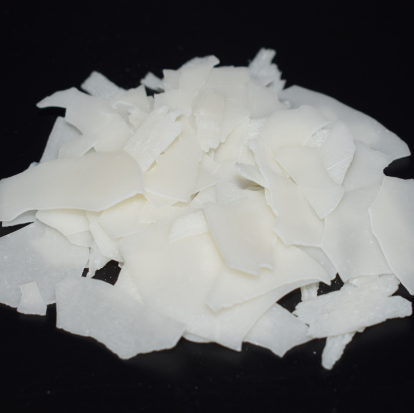
Polysulfide Rubber Modified Epoxy Adhesive Formula
Two-Component Modified Epoxy Adhesive Formula 1
Component | Raw Material | Dosage Range | Auxiliary Agent | Dosage Range |
Part A | Epoxy Resin (E-44) | 100 | Trimethyl Phosphate | 10 ~ 15 |
Polysulfide Rubber | 20 ~ 30 | Other Auxiliaries | Appropriate Amount | |
Lead Trioxide Powder (300 Mesh) | 50 ~ 60 |
|
| |
Part B | Tetraethylenepentamine-Thiourea Condensate | 15 ~ 25 |
|

Two-Component Modified Epoxy Adhesive Formula 2
Component | Raw Material | Dosage | Matching Ingredient | Dosage |
Part A | Epoxy Resin (E-44) | 100 | Polysulfide Rubber | 30 ~ 40 |
Part B | Diethylenetriamine | 10 | Thiourea | 1 ~ 3 |
Accelerator | 5.0 | Other Additives | Appropriate amount |
Polyurethane Toughened Epoxy Adhesive Formula
General Purpose Polyurethane Toughened Epoxy Adhesive Formula 1
Component | Raw Material | Dosage Range | Auxiliary Agent | Dosage Range |
Part A | Epoxy Resin (E-51) | 100 | Dibutyl Phthalate | 5 ~ 10 |
Polyurethane Prepolymer | 40 ~ 60 | Talc (200 Mesh) | 20 ~ 40 | |
Part B | Triethylenetetramine | 10 ~ 15 | Other Auxiliaries | Appropriate Amount |



General Purpose Polyurethane Toughened Epoxy Adhesive Formula 2
Component | Raw Material | Dosage | Matching Ingredient | Dosage |
Part A | Epoxy Resin (E-51) | 100 | Filler | 40 ~ 80 |
Polyurethane Toughener | 30 | Additives | Appropriate amount | |
Part B | Modified Amine Curing Agent | 20 ~ 25 | Coupling Agent | 3 |
Why Choose Kerton Chemicals as Your Epoxy Adhesive Raw Material Supplier?
Kerton Chemicals' products and services have reached Europe, the Americas, the Middle East, and Southeast Asia, supporting global customers with reliable raw materials for toughened epoxy adhesive formulations.
We focus on stable supply, professional technical support, and efficient service to help you optimize adhesive performance and reduce production costs. To start cooperation, you can visit our official website https://www.kerton-industry.com/ or contact our sales team directly for inquiries, samples, and bulk orders.
Previous page:
Blog update
What are the types of chemical materials
2024-11-05
What do chemical materials do?
2024-11-05
What are the industrial chemicals
2024-11-05